
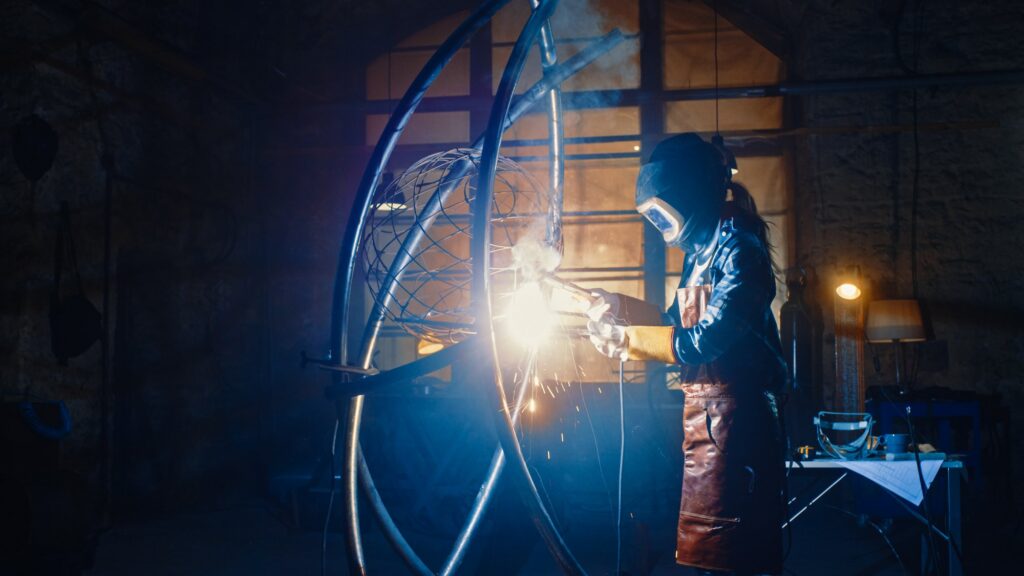
Not all welding cables are built the same. In high-demand industrial environments, welding cable performance determines project outcomes, equipment longevity, and worker safety. Cables that underperform create safety risks and unplanned downtime. Purchasing managers and engineers are often forced to make decisions quickly.
Understanding the key factors that define cable quality leads to better purchasing decisions and fewer problems on the floor. Decisions made during the specification process shape whether a cable lasts one season or several years. This article breaks down what separates a reliable welding cable from one that creates problems.
The Role of Conductor Quality in Welding Cable Performance
Conductor quality is the foundation of any welding cable. These cables use fine-stranded copper conductors. Finer stranding increases flexibility and improves conductivity along the cable's full length.

Copper purity matters just as much. Lower-quality copper increases electrical resistance. Higher resistance generates excess heat. That heat degrades insulation and shortens the cable's useful life.
Conductors that are not properly drawn can have surface defects or inconsistent diameter. Both issues affect electrical performance and reduce durability over time.
Conductor gauge is another critical factor. Heavier-gauge cables handle higher current loads. Matching the gauge to the application prevents voltage drop and overheating. These are two of the most common causes of premature failure in demanding welding operations. Getting the conductor specification right from the start saves time and money later.
Jacket Materials and Why They Matter for Welding Cable Performance
The jacket is the cable's first line of defense. In welding environments, cables face extreme heat, oil exposure, moisture, and constant mechanical stress. The jacket must handle all of these conditions without cracking or degrading.
Common jacket materials used in high-performance welding cables include:
- Cross-Linked Polyethylene (XLPE): The superior choice for demanding applications, delivering excellent chemical resistance and high-temperature performance. EBT exclusively utilizes these advanced blends to ensure maximum performance and durability.
- EPDM (Ethylene Propylene Diene Monomer): A common alternative that is flexible in cold temperatures but can struggle with oil resistance in certain industrial environments.
- Neoprene: Another alternative offering solid flame resistance, though it can be limited by extremely high-temperature requirements.
The choice of jacket material directly affects durability and safety. A jacket that cracks or hardens early creates hazards and drives up replacement costs.
Flexibility and Durability in Harsh Environments
Welding cables move constantly throughout a workday. Workers drag, coil, and bend them across the floor and around equipment. A stiff cable slows operations and creates frustration. It also fatigues faster at points of repeated bending.
Well-specified cables maintain flexibility across a wide temperature range. This matters for outdoor applications and cold-weather environments. Cables that stiffen in low temperatures are harder to manage. They are also more prone to cracking and damage.

Abrasion resistance is just as critical. Industrial work surfaces are rough and unforgiving. Cables run over concrete, metal grating, and sharp edges every day. The jacket must resist cuts and wear without compromising the conductor underneath.
How Manufacturing Processes Define Cable Reliability
The way a cable is manufactured shapes its performance as much as the materials used. Each step in production, from drawing the conductor to mixing the compound to curing the jacket, affects the final product.
Jacket curing is a particularly important stage. Conventional thermal curing can produce inconsistent cross-linking throughout the jacket material. Inconsistencies create weak points. Advanced curing technologies produce more uniform results. Uniform cross-linking translates to stronger mechanical properties and a longer service life.
The level of vertical integration a manufacturer maintains also matters. When one facility controls every stage of production, quality is more consistent. There are fewer points where variation can enter the process.
Key advantages of domestically produced, vertically integrated cables include:
- Shorter lead times compared to imported alternatives
- No exposure to international shipping delays or tariff costs
- Tighter quality control from raw material to finished product
- Custom specifications built to exact application requirements
Off-the-shelf cables meet general standards. They are not engineered for your specific application.
Specify the Right Cable Before Your Next Project Begins
Your application has specific requirements. A cable that almost meets your specs creates risk. You need a cable engineered to your exact standards.
Electron Beam is a U.S.-based custom wire and cable manufacturer. We draw our own copper, mix our own compounds, and use an electron beam curing process to strengthen cable jackets. This method produces more uniform cross-linking than conventional thermal curing. The result is a cable built to perform reliably over the long term.
We partner with OEMs, purchasing managers, and engineers to build cables to precise specifications. Domestic manufacturing keeps your lead times short. It also protects you from international shipping disruptions and tariff exposure. Connect with our team and discuss your application requirements.
FAQ
What three main factors determine the correct welding cable gauge (size)?
You must check three things. First is the required current (amperage). Higher amperage needs a thicker cable. Second is the total cable length. Longer cables increase resistance and need a larger gauge. Third is the welder's duty cycle. A higher duty cycle generates more heat, requiring a thicker cable for safety.
Why is it important to fully uncoil a long welding cable before use?
Leaving a long cable coiled creates an electrical effect called inductance. Inductance creates a magnetic field. This field works against the current flow. This can cause the welding arc to become unstable. Always straighten long cables for consistent performance.
How do molded connectors enhance cable durability beyond the jacket material?
The jacket protects the cable body. Molded connectors seal the cable ends. This eliminates entry points for fluids like oil or moisture. They also provide strain relief. This transfers mechanical load away from where the conductor terminates.
You must be logged in to post a comment.