• 1275 Harvard Drive, Kankakee, IL 60901, USA
A copper refining plant, a part of a cable manufacturing company with vertical integration.

What Vertical Integration Means for Cable Quality and Supply Reliability

​When a customer orders custom wire or cable, they are trusting a manufacturer. Customers trust the delivery of a product that performs exactly as specified, on time, every time. Behind that promise sits a decision most buyers never see: how much of the production process the manufacturer actually controls. That decision is called vertical integration. More importantly, it has a direct impact on both the quality of the finished cable and the reliability of the supply chain behind it.

What Vertical Integration Actually Means

Vertical integration means a company manages multiple production stages instead of outsourcing them to third parties. In custom wire and cable manufacturing, this includes drawing copper from a raw rod and formulating jacket compounds. It also includes extruding and curing insulation and performing final testing, all under one roof.

Contrast this with a non-integrated competitor. That supplier might purchase pre-drawn copper from another supplier. Then they’ll source the compound from another. That competitor might even outsource curing to a separate facility. Each additional vendor introduces a new variable, a new lead time, and a new opportunity for something to go wrong. Vertical integration removes many of those variables by keeping control close to home.
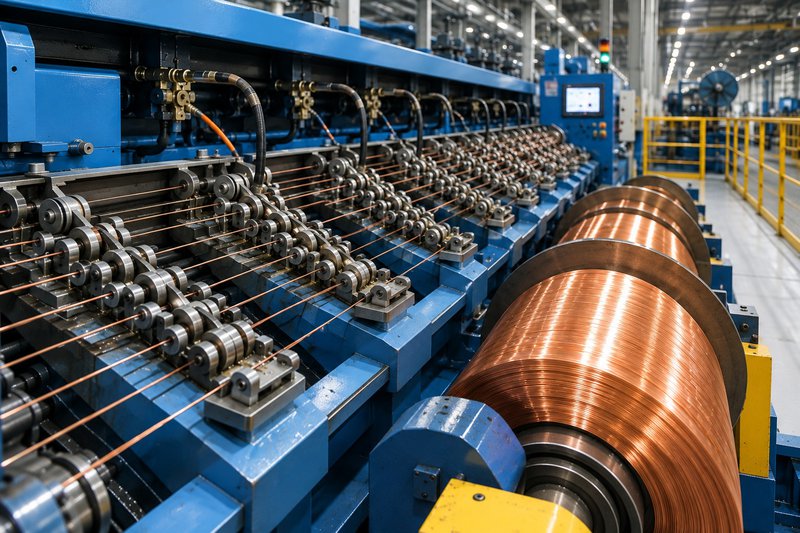
A copper coil winder, common among copper wire factories with vertical integration.

How This Setup Improves Cable Quality

Quality control is easiest to enforce when a company owns every step of the process. Consider what happens when copper is drawn in-house rather than purchased from an outside mill. Engineers can specify exact conductivity, temper, and diameter tolerances. They can also verify them immediately, instead of relying on a supplier's certification and hoping it matches every batch.

The same principle applies to compound mixing. Manufacturers that formulate their own jacket compounds can tailor materials for specific applications. They can improve cold-weather flexibility, abrasion resistance, or chemical resistance for harsh industrial environments. Off-the-shelf compounds usually satisfy general use. However, custom-mixed compounds fit unique requirements.

Curing is another area where vertical integration pays off. Electron beam crosslinking strengthens the cable jacket at the molecular level and occurs entirely in-house. It produces a tougher, more durable product than compounds cured with conventional heat methods. Because compounding, extrusion, and curing happen together, engineers can adjust formulations and curing parameters simultaneously. They avoid shipping products to third parties and waiting for test results.

Strengthening Supply Chain Reliability

Quality is only half of the equation. The other half is dependability, and vertical integration plays just as significant a role there. Every outside vendor in a supply chain is a potential point of failure. A shortage at a copper mill, a delay at a compounding facility, or a backlog at a curing subcontractor can all stall a project that has nothing to do with the manufacturer's own operations.

By drawing copper and mixing compounds internally, a vertically integrated manufacturer removes several of those failure points entirely. Lead times become more predictable because they depend on internal scheduling instead of multiple external suppliers. External suppliers each have their own backlogs and production priorities. Integrated manufacturers also have greater flexibility when raw material costs rise or copper supplies tighten. They can manage more of the impact instead of passing every cost increase to customers.

This kind of resilience matters more than ever. According to the National Institute of Standards and Technology, much of a manufacturer's spending occurs within its supply chain. That makes the supply chain a key target for cost reduction and risk mitigation. Bringing production stages in-house shortens the supply chain and reduces uncertainty. It also reduces reliance on multiple outside vendors.

A supplier with vertical integration covers from refinery to the cable production.

Vertical Integration and Custom Wire and Cable Production

Custom orders put vertical integration to the test. A customer with a unique application, whether that involves unusual voltage requirements, extreme temperature ranges, or tight space constraints, needs a manufacturer that can adjust multiple parts of the process at once. A vertically integrated operation can modify copper temper, compound formulation, and jacket thickness in a coordinated way, rather than negotiating changes across several outside suppliers who each have their own constraints.

This flexibility helps engineers shorten custom cable development time and reduce the number of prototype rounds before they finalize a design. It also means that when a customer needs a modification mid-project, the manufacturer can respond quickly instead of waiting on a third party's production schedule.

Why This Matters When Choosing a Cable Supplier

For buyers evaluating wire and cable suppliers, asking about vertical integration is one of the most useful questions they can raise. A manufacturer that draws its own copper, mixes its own compounds, and cures its own jackets is in a better position. They can guarantee consistent quality and hold firm on delivery timelines, even when market conditions get difficult. Vertical integration is not simply a manufacturing philosophy. It is a practical advantage that shows up in every cable that ships and every deadline that gets met.

If you are evaluating suppliers for an upcoming project or need a custom wire or cable solution built to your exact specifications, don’t hesitate to send us a message. We would welcome the chance to walk through your requirements and show you what a vertically integrated process can do for your next order.
Read More
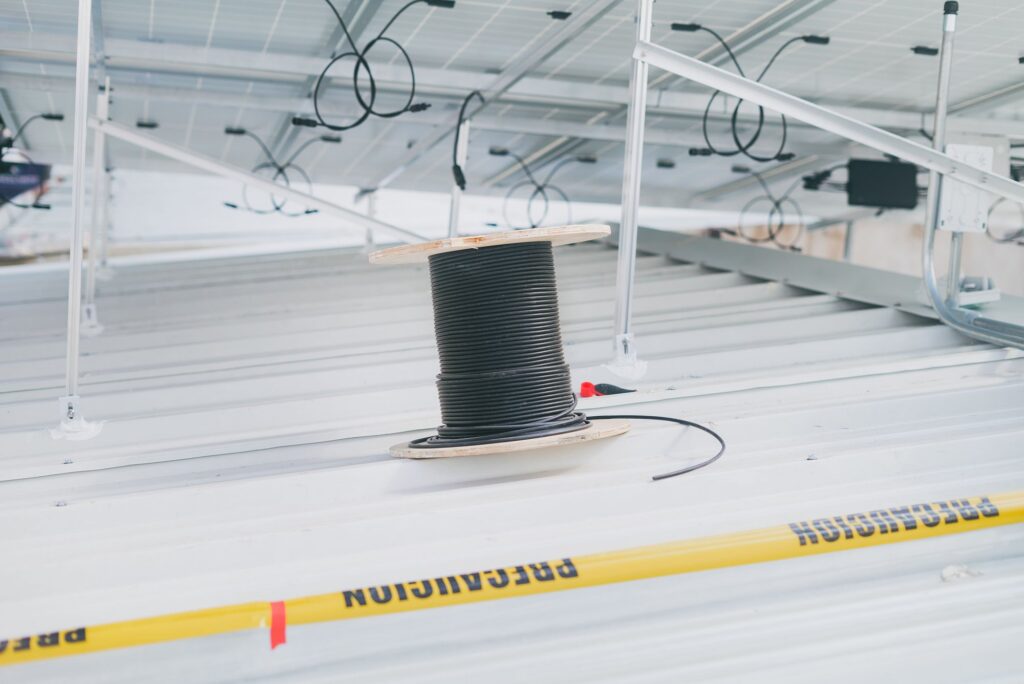
Electrical wire on a solar panel installation, provided by US cable suppliers.

Short Lead Times vs. Overseas Shipping: The Hidden ROI of Domestic Cable Suppliers

​Every procurement team has faced this decision at some point. A quote comes in from an overseas supplier at a price that looks impossible to beat. The unit cost is lower, sometimes significantly so, and on a spreadsheet, the choice seems obvious. But unit price is only one line item in a much longer equation, and for companies that depend on custom wire and cable, the real cost often shows up months later in the form of stalled production lines and missed shipping windows. The team then chooses between cable suppliers.

This is where the decision between foreign shipping and US cable suppliers gets more complicated than it first appears.

The True Cost of a Cheaper Quote from Cable Suppliers

Overseas sourcing typically involves ocean freight, customs clearance, and lead times that stretch from six weeks to several months. Add in potential tariff changes, port congestion, or a single delayed container, and a project timeline can slip without warning. For manufacturers running just-in-time production, a two-week delay in cable delivery can ripple through an entire assembly schedule.

There's also the matter of minimum order quantities. Many overseas mills require large batch sizes to make production economical, which means companies either overbuy inventory they don't need yet or underbuy and risk running out mid-project. Neither option is ideal for businesses that need flexibility.

Reputable cable suppliers based in the U.S. tend to operate differently. Shorter shipping distances, no customs delays, and closer communication with engineering teams all combine to compress lead times from months to weeks, sometimes days, for standard configurations.

A large cargo including products from foreign cable suppliers.

Why Lead Time Is a Financial Metric, Not Just a Logistics One

It's tempting to treat lead time as purely an operational concern. For some, it’s something the logistics team worries about while finance focuses on unit cost. In reality, the two are deeply connected.

Consider the carrying cost of extra inventory held as a buffer against overseas delays. Examine the cost of a production line sitting idle while a shipment clears customs. Then, look into the costs of an order that can't ship on time. The reason: because a critical cable component is stuck at sea. Each of these scenarios has a dollar value. More often than not, that value often exceeds the per-unit savings. It effectively nullifies the factor that made the overseas quote attractive in the first place.

According to the U.S. Bureau of Labor Statistics, supply chain disruptions and transportation delays remain among the most cited factors. These two greatly affect manufacturing output and cost predictability nationwide. This was additionally highlighted during the COVID era. Moreover, these factors underscore how sourcing decisions ripple far beyond the initial purchase price.

Cable Suppliers on Quality Consistency and Custom Specifications

Custom wire and cable manufacturing isn't a one-size-fits-all business. Insulation type, jacket material, conductor configuration, and curing process all need to match the specific demands of the application. That applies whether that's industrial welding equipment, heavy machinery, or specialized OEM products.

Domestic wire and cable manufacturers that draw their own copper and mix their own compounds have a level of control over the finished product. That can get difficult to replicate through a long-distance supply chain. When something needs to be adjusted, whether it's a jacket formulation or a conductor gauge, that conversation happens in days, not weeks. And often, it happens without a language or time zone barrier complicating the process.

This kind of vertical integration also tends to produce a more durable end product. Curing methods that use an electron beam process, for example, offer a cleaner and more environmentally responsible way to strengthen cable jackets compared to traditional heat curing methods, while also improving resistance to abrasion, chemicals, and UV exposure.

Flexibility Is Part of the ROI Equation

One of the most overlooked advantages of working with domestic cable suppliers is the ability to adapt quickly. If a customer needs a custom length, a modified jacket compound, or a small batch run to test a new application, that kind of responsiveness is far easier to achieve when the supplier is a phone call away rather than an ocean away.

This flexibility matters more than it might seem on paper. Markets shift, project specs change, and customer demands evolve. Companies that can pivot quickly with their cable suppliers tend to avoid the costly rework and delays that come from being locked into rigid overseas production schedules.

US cable suppliers offer unique advantages in terms of pricing and quality control.

Find Your New Cable Suppliers Today

If your team is weighing the tradeoffs between overseas pricing and domestic reliability, it helps to talk through the specifics of your application. Send us a message to discuss lead times, custom specifications, or how a vertically integrated manufacturing process might fit into your next project. We're happy to walk through the details and help you find the right fit.

Read More
How Tariffs and Global Supply Chains Are Reshaping Cable Sourcing Decisions cover

How Tariffs and Global Supply Chains Are Reshaping Cable Sourcing Decisions

​Wire and cable buyers used to make sourcing decisions based on price and lead time alone. That calculation has changed. Tariff policy, shifting trade agreements, and repeated overseas shipping disruptions have pushed procurement teams to rethink where their materials come from and why. For many companies, US cable sourcing has moved from a nice-to-have to a genuine competitive advantage.

Why US Cable Sourcing Has Become a Strategic Priority

A few years ago, sourcing custom wire and cable from overseas suppliers made financial sense for a lot of buyers. Labor costs were lower, and global shipping was relatively predictable. Neither of those conditions holds up as reliably today.

Rising tariffs on imported metals and finished cable products have narrowed or eliminated the cost advantage of offshore sourcing. At the same time, port congestion, longer lead times, and currency volatility have made international supply chains harder to plan around. Procurement teams are now weighing total landed cost, not just unit price, and US cable sourcing is winning more of those comparisons than it used to.

A massive stack of cables from a US cable sourcing arrangement.

The Real Cost of Tariffs on Imported Wire and Cable

Tariffs do not just raise the sticker price on imported cable. They ripple through a project budget in ways that are easy to underestimate. A supplier quoting a job today may see the cost structure shift again before the order ships, especially as copper and copper-intensive derivative products remain a moving target for trade policy.

That unpredictability is a real business risk. A project bid six months ago, based on pricing available at the time, can lose margin fast if new duties apply before materials arrive. Buyers who lock in US cable sourcing reduce their exposure to these swings and gain a level of pricing stability that offshore contracts cannot match right now.

What the Federal Data Shows

The US cable sourcing against is not a minor policy footnote. In fact, the federal government has imposed tariffs on aluminum, steel, and copper products, according to the Congressional Research Service. Additionally, the government determined these imports threaten to impair national security. Tariff structures have been revised multiple times as copper coverage has expanded. The Congressional Research Service also notes something important. Moreover, tariffs on copper-intensive derivative products, including cables and connectors, took effect in 2025. These tariffs were further adjusted the following year.

For buyers, that means the tariff landscape on imported cable is still evolving, not settling. Anyone planning a sourcing strategy around today's rates should build in room for further change.

The Case for Vertically Integrated Domestic Manufacturing

Vertical integration is one reason US cable sourcing holds up so well under pressure. After all, a manufacturer that draws its own copper, mixes its own compounds, and manages every stage of production in-house isn't waiting on multiple overseas vendors to fall in line. As a result, the supply chain becomes shorter and more predictable, even for custom copper rope requirements, for example. Consequently, the manufacturer gains far more control over cost, quality, and delivery timing.

There is also a performance argument. Advanced curing methods, including electron beam crosslinking, produce a jacket that is tougher and more resistant to wear than many conventional processes, while using less energy and generating less waste than traditional heat-cure methods. Buyers get a stronger, more durable cable without the environmental trade-offs that come with older manufacturing approaches.

US cable sourcing allows for a steady supply of copper cables and wires.
Coi

Custom Wire and Cable Built for Specific Applications

Every project has different demands. Some projects encounter unusual gauge requirements, specific jacket properties, or performance in a harsh operating environment. Domestic manufacturers with flexible production capabilities can adjust specifications without forcing a customer into a standardized, one-size-fits-all product. That kind of responsiveness is difficult to get from an overseas supplier. In most cases, they have to work through long lead times and rigid minimum order quantities.

For companies evaluating US cable sourcing as part of a broader supply chain strategy, custom capability matters. It matters just as much as tariff exposure. A supplier that can adapt quickly to a unique spec is well positioned. That supplier is also the one best able to solve problems when a project timeline gets tight.

Choosing a US Cable Sourcing Partner You Can Rely On

Tariff policy will keep shifting, and global shipping will keep presenting new challenges. What stays constant is the value of a domestic manufacturing partner who controls its own process from raw copper to finished cable. That combination of stability, quality, and flexibility is exactly why US cable sourcing continues to gain ground.

If your team is reassessing where your wire and cable comes from, we would welcome the chance to talk through your specifications and show you how a US-based, vertically integrated approach can strengthen your supply chain. Send us a message today, and let's find the right cable solution for your project.

Read More
Welding a steel pipe, with the welding cable shown.

Why US-Made Welding Cable Matters for OEMs and Manufacturers in 2026

​Sourcing decisions in 2026 carry more weight than they did in the past. Tariffs shift without warning, shipping timelines stretch, and quality inconsistencies from overseas suppliers can quietly erode a production schedule. For OEMs and manufacturers who depend on welding cable to keep operations running, the source of that cable is no longer a minor detail. It is a decision that touches safety, uptime, and the bottom line.

The Real Cost of Cutting Corners on Your Welding Cable

A welding cable looks simple from the outside. It is just copper wrapped in insulation, right? In practice, the quality of that copper and the durability of that jacket determine how well a cable holds up in demanding applications. Cheaper imported cable often uses lower-grade copper blends and insulation that cracks or degrades faster under heat, UV exposure, and constant flexing.

For an OEM building equipment that customers expect to last, a weak link in the cable supply chain becomes a warranty issue down the road. For a manufacturer running welding cable on a production floor every day, premature failure means downtime, replacement costs, and potential safety hazards. Domestically produced welding cable tends to hold tighter tolerances because manufacturers here are closer to their customers and more accountable for what leaves the facility.

Durable copper cables are often used for welding cable construction.

Supply Chain Reliability Is Not Optional Anymore

Global shipping delays and unpredictable tariff schedules have made overseas sourcing a gamble for companies that cannot afford production gaps. When welding cable ships from across an ocean, a single customs hold or port slowdown can stall an entire project.

Working with a domestic supplier shortens that chain considerably. Lead times are more predictable, communication happens in the same time zone, and problems get resolved in days rather than weeks. Shorter lead times reduce the quantity of on-hand material you need to stock, which frees up capital and reduces carrying costs. For OEMs building to spec, this reliability makes it easier to plan inventory without overstocking just to hedge against uncertainty.

Welding Cable QC Starts With Vertical Integration

Not all welding cable manufacturers control the same parts of the process. Some buy pre-made copper stock and outsource compound mixing, which introduces variability at every handoff. Manufacturers that draw their own copper and formulate their own jacket compounds have far more control over consistency from batch to batch.

This kind of vertical integration also allows for genuine customization of wires and cables. Instead of choosing from a limited catalog of standard sizes, OEMs and manufacturers can work directly with engineers. Together, they specify conductor count, jacket thickness, and flexibility requirements suited to their exact application. That level of flexibility is difficult to find with cable sourced through overseas distributors. These distributors are often several steps removed from actual production.

Durability Through Better Curing Methods

The way a cable jacket is cured matters as much as what it is made of. Traditional curing methods can leave cable more vulnerable to weld spatter, abrasion, and UV breakdown over time. Meanwhile, newer curing processes produce a tougher, more resilient jacket. Additionally, it does this without relying on the heavier chemical loads used in older production methods.

For manufacturers running welding cable in high-heat, high-friction environments, that added durability matters. It translates directly into fewer replacements and safer working conditions. It is also a more environmentally responsible approach. This is increasingly relevant as OEMs face pressure from customers and regulators to document sustainable sourcing practices.

A welder on duty, with the work clamp connected to the welding machine via a welding cable.

Compliance and Safety Standards Still Come First

Regardless of where welding cable is manufactured, it needs to meet established safety requirements for the environments it will be used in. The Occupational Safety and Health Administration outlines specific standards for arc welding equipment. This covers requirements around cable insulation, grounding, and safe handling to prevent overheating and damage. Reviewing these standards is a useful starting point for any OEM evaluating a new cable supplier. Take note that compliance issues discovered after installation are far more costly to fix. You can review the full standard directly through OSHA's arc welding and cutting regulation.

Domestic manufacturers build to these standards from the start. They don't retrofit imported cable to meet them. This approach tends to give OEMs and manufacturers far more confidence in long-term compliance.

What This Means Going Into 2026

As trade policy continues to shift, manufacturers face growing pressure to shorten supply chains. Because of this, welding cable sourcing decisions deserve more scrutiny than they have historically received. Domestic production offers tighter quality control, faster turnaround, and the kind of customization that overseas suppliers rarely match. For OEMs building equipment meant to last and manufacturers who cannot afford unplanned downtime, that difference adds up fast.

If your team is reevaluating where your welding cable comes from, we would be glad to help. We can talk through your specifications and show you what a domestic, vertically integrated approach can do for your production line. Reach out to our team, and let's find the right cable for your application.

Read More
Signs Your MIG Welding Cable Needs Replacing Before It Fails cover

Signs Your MIG Welding Cable Needs Replacing Before It Fails

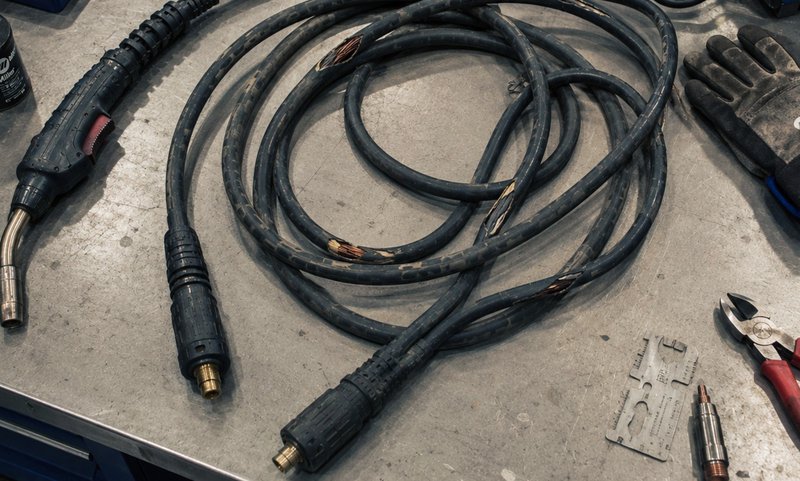
​Equipment failure during welding is rarely sudden. MIG welding cables show signs of wear long before they stop working entirely. Catching those signs early prevents unplanned downtime. It also protects operators and production equipment. A degraded cable affects arc quality and creates safety hazards. It can also lead to costly rework and rejected parts.

Understanding the warning signs helps procurement managers and production teams make timely replacement decisions. This guide covers what to look for before a cable reaches the point of failure.

Visible Damage to the Outer Jacket

The outer jacket is the primary layer of protection for welding cable. It shields the conductor assembly from abrasion, chemicals, and heat exposure. Cracks, cuts, and gouges in the jacket should be treated as immediate warning signs. Even minor surface damage can grow under repeated flex cycles. Exposed conductors create a real risk of arcing or short circuits.

Discoloration is another indicator worth watching. A jacket that has turned brown, brittle, or shiny has experienced thermal stress. Sections near the torch head typically take the most heat and mechanical wear. Any visible compromise to jacket integrity warrants a close inspection and likely replacement.

Arc Instability and Inconsistent Weld Quality

Weld quality is often the first measurable sign of cable degradation. A cable with internal damage introduces resistance into the circuit. That resistance disrupts current flow and causes arc instability. Increased spatter without any change in settings is a common early symptom.

Weld porosity or inconsistent bead appearance may also point to a cable issue. Voltage drops during active welding indicate that the conductor is no longer carrying current efficiently. Broken or compressed strands inside the cable reduce its overall current-carrying capacity. If performance issues appear and equipment settings check out, the cable itself should be the next thing inspected.

Heat Damage and Overheating Symptoms

A cable that runs hotter than normal is under stress. Heat buildup accelerates jacket degradation and conductor fatigue. It also signals that the cable may be undersized for the application. Checking for heat-related damage should be part of regular equipment maintenance.

Watch for these specific signs:

  • The cable feels hot to the touch during or after normal welding cycles
  • Jacket sections show bubbling, softening, or a shiny, melted texture
  • A persistent burning smell lingers after the weld area cools
  • The cable develops stiff sections that were previously flexible

Conductor construction plays a direct role in heat performance. Fine-strand copper conductors distribute current more evenly. They also manage heat more effectively under load. Cables rated for higher amperage reduce thermal stress during extended production runs.

Physical Wear at Connectors and Along the Cable Body

The most mechanical stress on a welding cable occurs at the connection points. Ferrules and connector ends experience constant pulling, twisting, and bending during use. Over time, this stress causes conductor strands to break at the connection site. A cable that sparks at the connector end signals internal damage at that junction.

Kinks along the cable body are another warning sign. A kinked cable places concentrated stress on individual strands. Once strands begin to break, the problem compounds with each use cycle. Stiffness that develops in a previously flexible cable usually means internal damage has already occurred. Replace the cable before that stiffness results in a full conductor break.

MIG Welding: Build the Right Cable for Your Operation

You shouldn’t have to work around a cable that’s letting your operation down. At Electron Beam Technologies, we manufacture custom MIG welding cables built for demanding industrial environments. We draw our own copper and mix our own XLPE jacket compounds. Our electron beam curing process creates a stronger molecular bond in the jacket.

That means better resistance to heat, abrasion, and chemicals over the life of the cable. Every cable is built to your exact specifications. Our domestic manufacturing ensures short lead times without the uncertainty of international shipping. You also avoid the added costs that come with tariffs on imported products.

If your current cable is showing signs of wear, contact us today. Let’s build you a custom replacement that performs reliably from day one.

Read More
The Real Cost of Cheap Welding Cable: Downtime, Rework, and Replacement cover

The Real Cost of Cheap Welding Cable: Downtime, Rework, and Replacement

​When sourcing welding cable, the lowest price often looks like the smartest decision. But cheap cable rarely stays cheap for long. The real costs appear later. They show up as unplanned downtime, failed welds, and early replacement. Procurement decisions made on price alone can quietly erode margins over months. Understanding where cheap cable fails helps you avoid those costs before they compound.

When Welding Cable Fails, Production Stops

A cable failure on a welding line does not just affect one workstation. It can halt an entire production run. Weld quality drops when cable resistance increases. Inconsistent current delivery leads to weak or incomplete welds. Failed quality checks and the resulting rework inevitably cause delivery windows to slip.

In high-volume manufacturing environments, every unplanned stop carries a cost. Technicians are pulled from scheduled tasks. Equipment sits idle. Supervisors must diagnose the source before work can resume. In many cases, the root cause turns out to be the cable itself.

A cheap welding cable may pass initial inspection. But continuous duty cycles and harsh job-site conditions quickly expose its limits.

Rework Adds Up Faster Than You Think

Rework is one of the most underestimated costs in manufacturing. It rarely gets traced directly back to cable quality. But the connection is real.

When a weld fails, the process of identifying, correcting, and re-inspecting it takes significant time and labor. Consider what rework actually involves:

  • Re-welding rejected parts and restarting the inspection process
  • Pulling technicians off scheduled work to address unexpected failures
  • Logging and documenting nonconformances for quality records
  • Delaying shipments or missing customer delivery windows

These costs do not appear on a single line item. Over weeks and months, they represent a significant drain on productivity and profitability. A cable that saves money at purchase can quietly fund a costly downstream rework problem.

What Cheap Welding Cable Costs You in Longevity

Cable degradation is gradual. It does not always announce itself. Resistance increases slowly. Insulation softens or cracks. Conductors break down under repeated flexing. A cable that seemed adequate last month may be the source of today's quality problem.

The jacket material plays a major role in longevity. Low-grade jacket compounds break down faster under heat and mechanical stress. They lose flexibility. They crack at bend points. When moisture reaches the conductor, performance deteriorates, and failures follow.

Conductor construction matters just as much. Poorly stranded copper does not flex efficiently under repeated movement. When individual strands begin to break, resistance climbs, and weld output becomes inconsistent.

Replacement frequency is where cheap cable reveals its true cost. Unlike quality cables, those that get replaced every six months cost far more over three years than a premium cable replaced once. The labor, downtime, and lost output tied to each replacement cycle multiply quickly.

High-Performance Welding Cables

What to Look for in a High-Performance Welding Cable

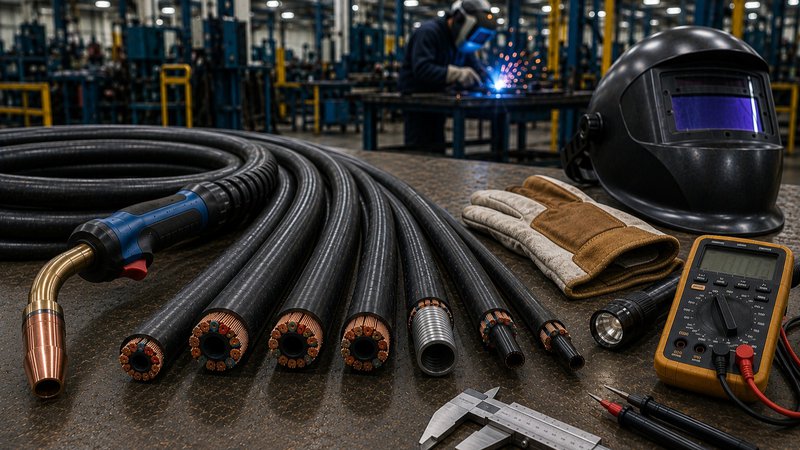
Not all welding cables are built the same. Construction differences determine how well a cable performs under load. They also determine how long it holds up. Key factors to evaluate before purchasing include:

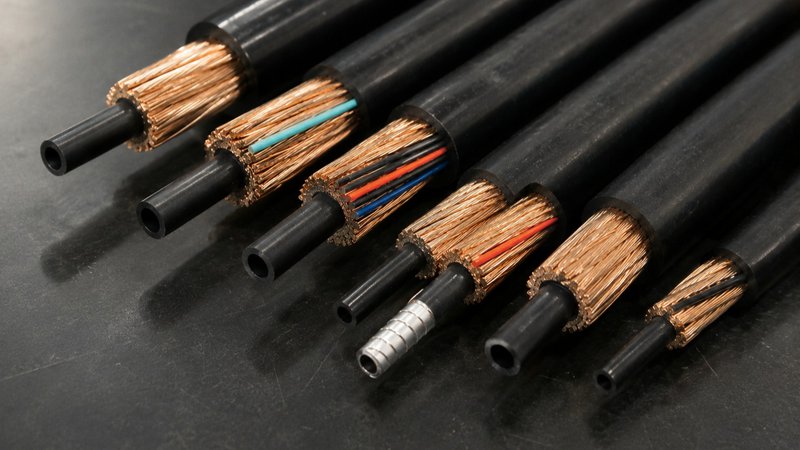
  • Conductor design: Fine stranding improves flexibility and reduces fatigue under repeated movement
  • Jacket compound: Higher-grade compounds maintain integrity longer under continuous heat, abrasion, and flex
  • Wall thickness and outer diameter: These affect durability and compatibility with your specific equipment setup
  • Special performance requirements: Oil resistance, flame retardancy, and low-temperature flexibility are rarely standard on generic cable

Off-the-shelf cable is designed to meet broad specifications. It is not designed to meet yours. When your application has specific performance demands, a generic cable is rarely the right fit.

Stop Paying for Downtime. Start Specifying the Right Cable.

If rework, downtime, and replacement cycles are cutting into your margins, your cable may be the problem. At Electron Beam Technologies, we manufacture custom welding cables built to your exact specifications. We draw our own copper and mix our own jacket compounds right here in the USA. That means tighter control over every aspect of performance.

Our electron beam cross-linking process produces a stronger, more durable XLPE jacket than conventional curing methods. And because we manufacture domestically, you avoid the long lead times and tariff exposure that come with international sourcing.

Tell us what your application requires. We will build the cable around it. Reach out to our team to get started.

Read More